
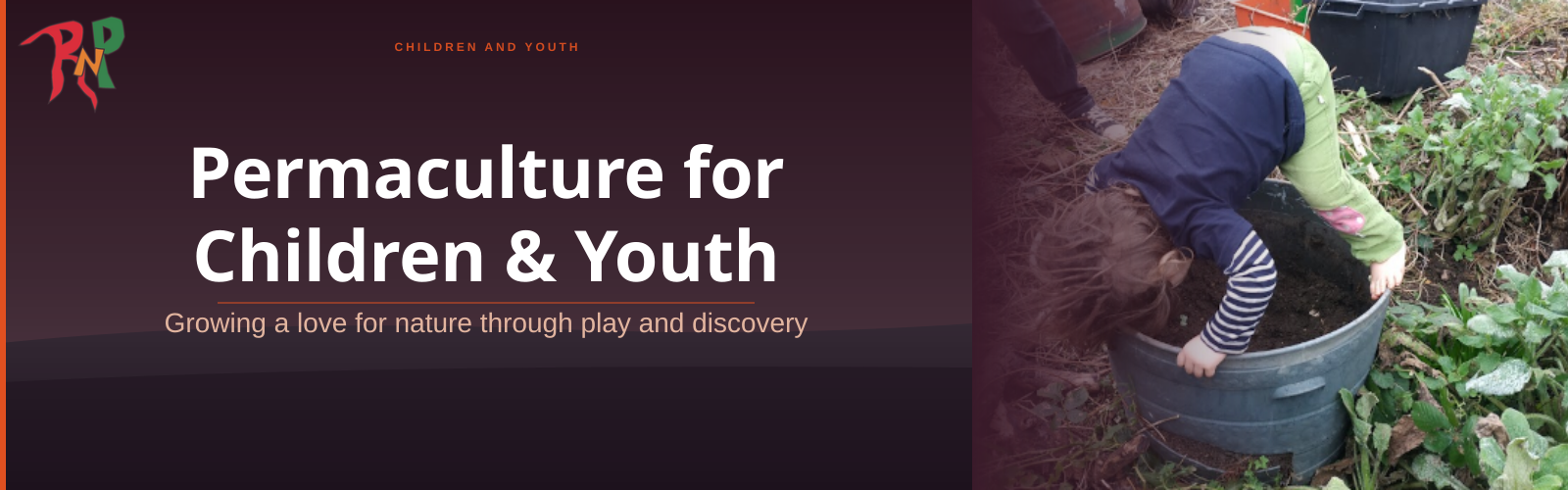
Permaculture is about designing systems that support life. At Roots n Permaculture, we also explore how ecological design thinking can support the learning and development of children and young people.
Children are naturally curious about the living world. When this curiosity is supported through nature based learning, it can nurture confidence, creativity and a deeper relationship with the natural environment.
The learning pathways connected to Children in Permaculture (CiP) and Youth in Permaculture (YiP) explore practical ways educators, parents and community members can introduce ecological thinking to young learners.
Why Children and Youth Matter in Permaculture
Permaculture is often associated with food growing, ecological design and sustainable living for adults. However, the core ideas of observation, care and cooperation can also be introduced to younger learners in creative and meaningful ways.
When children interact with soil, plants, water, animals and shared spaces, they begin to develop their own relationship with the living world. These experiences are not about formal instruction but about exploration, curiosity and discovery.
The aim is not to teach children every aspect of permaculture. Instead, the focus is on creating environments where they can explore connections between people, nature and community.
Activities may include growing food, observing seasonal changes, storytelling, habitat exploration and collaborative play. These experiences support holistic development while gently introducing ecological awareness.
Children in Permaculture (CiP)
The Children in Permaculture course explores creative ways of engaging children with permaculture ideas through play, storytelling, observation and hands on learning.
This one day training is designed for educators and carers who want practical approaches they can adapt to their own learning environments.
What You May Explore
- Introduction to permaculture design principles
- Creative and playful nature based learning approaches
- Adapting activities for different age groups
- Simple tools and resources for educators
- Supporting curiosity, cooperation and ecological awareness
This course is suitable for teachers, forest school practitioners, parents, grandparents and community educators who work with younger learners.
Youth in Permaculture (YiP)
The Youth in Permaculture course explores ways of engaging teenagers and young adults in deeper ecological learning and practical design thinking.
Young people are often interested in meaningful action and social change. Permaculture can provide practical tools for exploring sustainability, community resilience and regenerative living.
The training introduces participatory learning methods that support discussion, creative thinking and collaborative projects.
Learning Outcomes
- Understanding permaculture principles for youth education
- Facilitating participatory learning and group activities
- Supporting youth led projects and ideas
- Encouraging ecological awareness and responsibility
- Building confidence and teamwork through practical learning
Designing Learnscapes
Children often learn best through play, movement and direct experience. The design of outdoor spaces therefore plays an important role in supporting learning.
The Designing Learnscapes training explores how permaculture design thinking can help create outdoor environments where children and young people can explore, play and learn.
Learnscapes can be developed in schools, nurseries, forest school settings, community gardens and shared public spaces. The focus is on working creatively with the resources that are already available.
What You Will Learn
- Introduction to permaculture design thinking for learning spaces
- The importance of nature connection for child development
- Ideas for outdoor play and exploration
- Practical design approaches for gardens and learning environments
- Examples from community projects and educational spaces
Who These Courses Are For
- Teachers and educators
- Forest school practitioners
- Parents and grandparents
- Community organisers
- Nature and garden educators
- Anyone interested in supporting children’s learning through nature
Learning With Roots n Permaculture
The courses are facilitated by Rakesh “Rootsman Rak”, a permaculture designer, teacher and community practitioner who has been teaching permaculture since 2009.
His approach combines ecological design knowledge, practical experience and participatory learning methods. Participants are encouraged to develop their own style of working with young learners.
“I have just completed the Children in Permaculture introductory course. The teaching style guided the group to share knowledge while adding experience from the facilitator. I felt inspired and encouraged to continue learning and making a difference.”
Amanda
“The course is very engaging and creative. You learn much more than the course content itself. The facilitator makes a strong effort to help everyone find value in the learning.”
Alex
Join a Course
If you are interested in exploring how permaculture can support children and young people, you are warmly invited to join one of these courses.
You will discover creative approaches to ecological education and learn how to design spaces and learning experiences that support curiosity, play and environmental awareness.
Visit the upcoming courses page to find current dates and availability.
Upcoming Children in Permaculture and Youth in Permaculture Courses
| No events |